
The world changes faster than our minds can update.
MindHug is a behavioural science organisation. Our training and experiential learning build psychological safety, practical skills and the behaviours that turn intention into lasting change.
What people come to us for
Where we work
Three areas. One behavioural gap.
People know what they want, and how to get there. What doesn’t follow is the behaviour , so the gap between intention and outcome stays open.
- Wellbeing
Feel Better
“I know what would help. I feel too stuck to do it.”
Burnout · Loneliness · Conflict · Rising absence · Psychological safety
- AI & Digital Security
Adapt Better
“We rolled out the tools. Some pushed back loudly, the rest quietly went back.”
AI adoption · AI workflows · Resistance · Growth mindset · Cyber security · Social engineering
- Innovation & Entrepreneurship
Build Better
“I freeze every time I have to sell or ask.”
Entrepreneurial mindset · Selling & raising · Founder resilience · Employability · Innovation · Sales Ready · Investment ready
We have helped universities, organisations, governments and entrepreneurs change behaviour where knowing was not enough.
Proof
What happened, and where.













- 5,000+People reached
- 85%Improved their cyber knowledge, and nobody got worse
- 100%Of founders improved in psychological safety
- 9 in 10Meet the goals they set for themselves
- 91%Of founders felt equipped to manage their mental wellbeing after attending
- 93%Of founders would recommend the programme
Figures are drawn from the programmes and participants we measured. The case studies carry the detail behind each.
- Entrepreneurs
LSE Generate · British Council
- Problem
- Founders were making conservative decisions under uncertainty, and setbacks were landing as verdicts rather than information.
- What we did
- A 20+ hour neuroscience and psychology programme built around cognitive reframing, setback planning and structured experiments with real customers. A British Council supported project, with LSE as lead delivery partner.
- Result
- 100% of founders improved in psychological safety
- Governments
UK Government, DSIT
- Problem
- Across two DSIT initiatives, participants had access to digital training and were not converting it into confidence, into use at work, or into employment. Confidence and application, not knowledge, were the blockers.
- What we did
- A 28 hour programme combining behavioural work with technical content and focused on application in participants’ own work, with 20 coaches trained to sustain it after delivery.
- Result
- 85% improved their cyber knowledge, and nobody got worse
- Universities
LSE Summer School
- Problem
- International students arriving into an intense academic environment, under workload pressure, and not using the support available.
- What we did
- 8+ hours of neuroscience and psychology programmes and workshops, delivered annually from 2022 to 2024.
- Result
- 9 in 10 meet the goals they set for themselves
“We partnered with MindHug to deliver workshops as part of our Mental Health Awareness week and were impressed by the range of workshops and therapists available.”
What our training and experiential learning feels like
If a psychologist met a mindfulness practitioner, met a game designer, and ran a hackathon together.
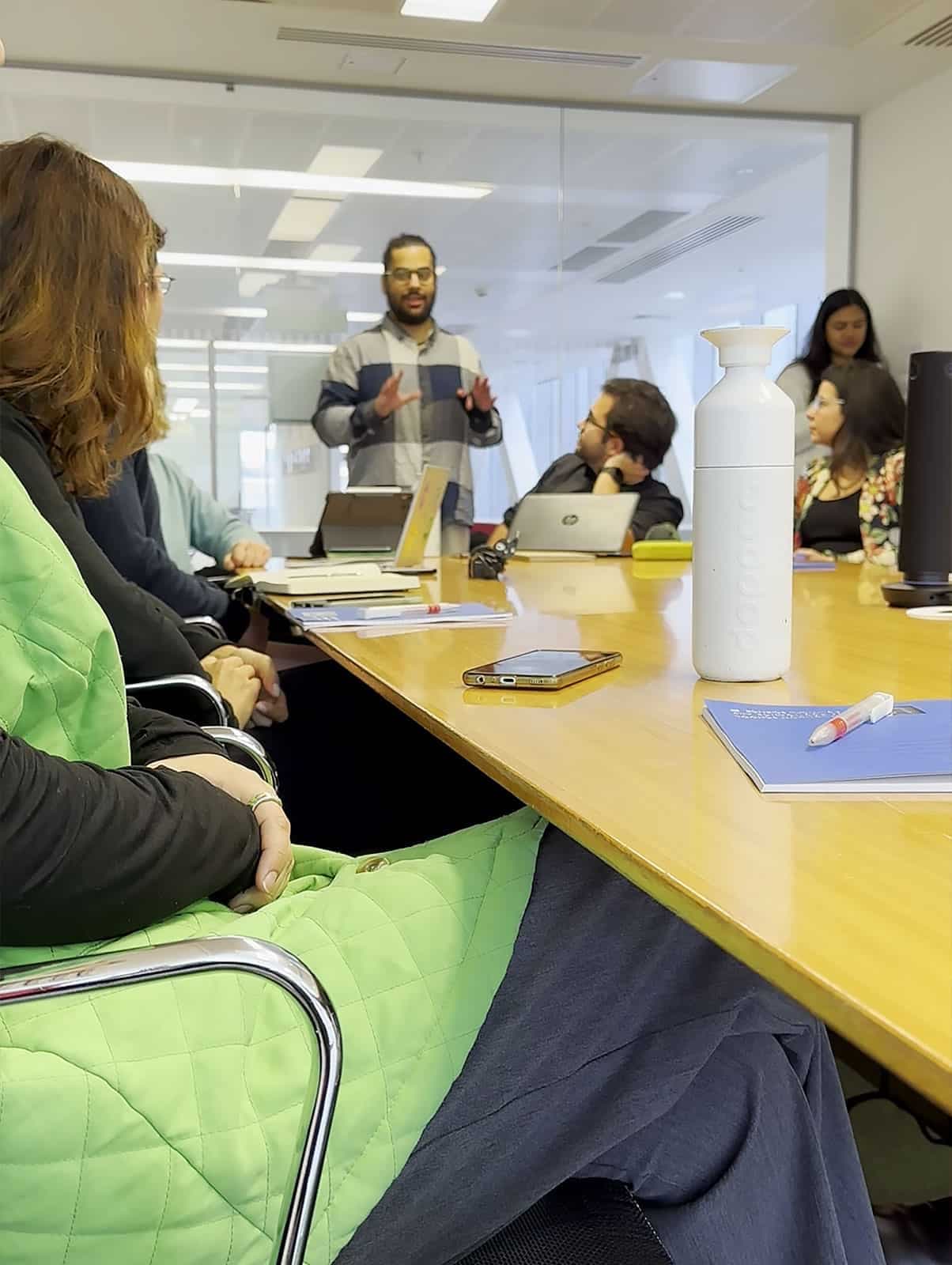
MindHug sessions combine psychology, sensory practice, play and real work. People practise new behaviours in the room rather than only hearing about them.
Understanding people
- Clinical psychologists
- Coaching
- Trauma informed
- Group work
Holistic and sensory
- Mindfulness
- Sound
- Breath
- Somatic work
Games and play
- Game formats
- Live demonstrations
- Curiosity
- Surprise
Learning by doing
- Hackathon formats
- VR
- Experiments
- Real work, in the room
- Universities, organisations and government programmes
- Clinical and applied psychology input
- Published behavioural science
- Measured every time
What every programme aims at
Two goals, in order: first enough psychological safety and capacity to try something different, then the practical skills to handle what is actually happening.
How this works, the mechanism, the model and how we measure it
Knowing matters. Doing changes things.
Tell us what you are seeing. We will help identify what may be getting in the way.