Behavioural science training and experiential learning, in one 40-hour programme.
Only need some of it? Each is bookable on its own.
What is in it
Four areas, one journey. Or book one component.
01 · Feel Better, and underneath all three
Psychology of Change
How minds process information, handle pressure and change habits. The foundation the other components build on.
On its own:
02 · Adapt Better
AI and digital adoption: adopt and build
Use AI and new tools with confidence, question what they give you, and build practical AI workflows.
03 · Adapt Better
Digital security
Spot social engineering and the red flags, and practise what to do next.
04 · Build Better
Innovation and entrepreneurship
An entrepreneurial mindset: test ideas, act under uncertainty, understand customers and sell.
Psychology of Change is CPD accredited, booked on its own or within MindHug One, and we are working towards CPD for all 40 hours. Our CPD listing (provider no. 20755).
Why one programme
The behaviours that shape us. The behaviours others exploit. The behaviours reflected in our machines.
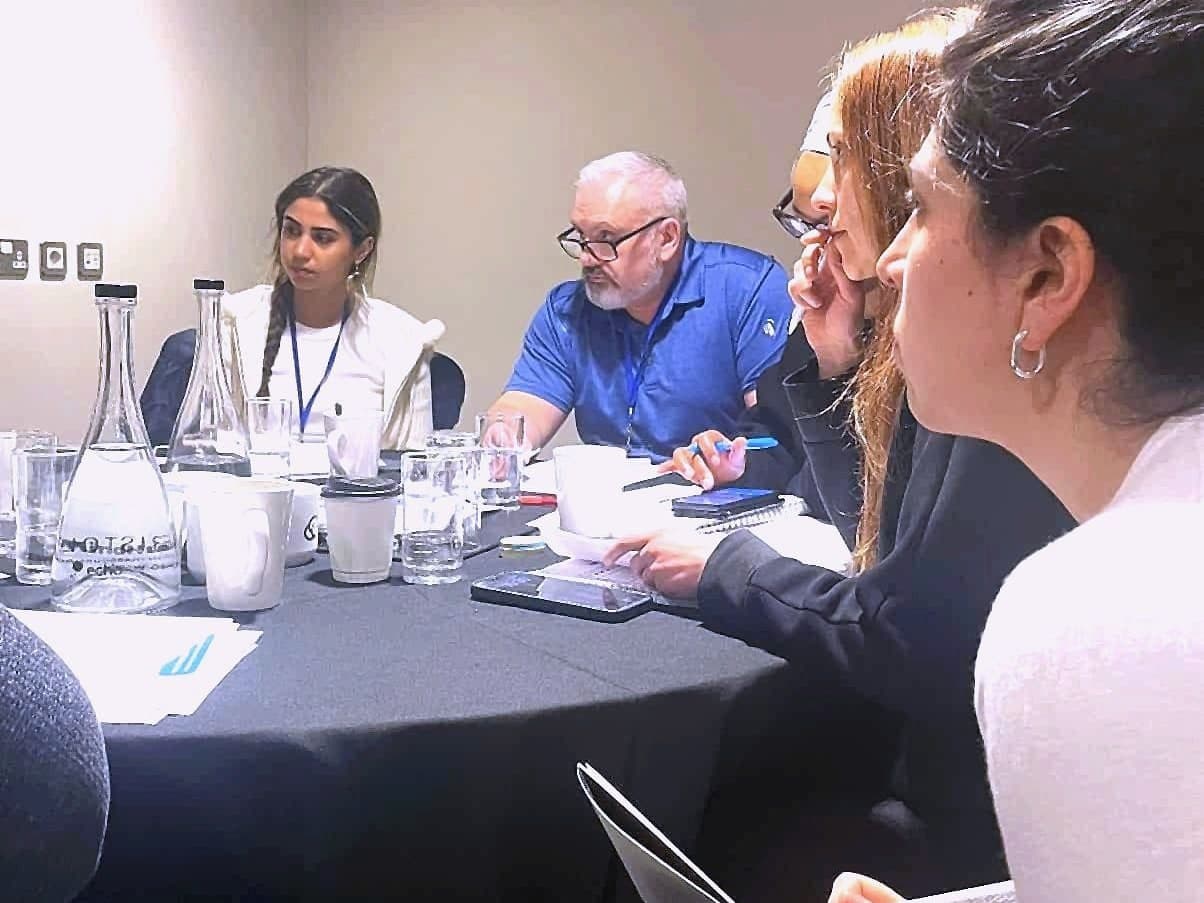
People change by experiencing how their mind works, not just hearing about it. In each component they feel a pattern, practise a different response, and that experience updates what they expect. The methods are backed by neuroscience and behavioural science.
How minds read signals, form expectations, take shortcuts and respond to uncertainty sits under all four components. Working with it helps people:
- manage pressure and build useful habits
- use, question and build AI
- recognise social engineering and practise digital security
- experiment, innovate and act under uncertainty
- understand customers, build products and explain their value
Take urgency. Notice how it rushes your judgement, and you can steady yourself under pressure, spot the scam that says “act now” and push back on a deadline that is not real. People learn to spot a pattern, practise a different response, and use it in more than one place.
Where AI fits
AI does not feel or think the way we do. But it learns from human data, and that data carries human patterns: fear, trust, assumptions, social pressure, reasoning. AI can repeat those patterns without the experience behind them, human behaviour showing through the shadow of data.
Knowing the patterns helps you question the inputs, context, assumptions, feedback and outputs. Some of the ways we help people change their responses can also inspire ways to steer AI systems. We test whether they work rather than assume it.
What people leave with
Skills, real work, and people to keep going with.
Skills, practised
Calming techniques, pausing before acting, checking AI answers, pitching. Built through games, simulations, AI builds, security scenarios and customer challenges, and measured before and after.
Tools to keep using
A participant toolkit, a red-flags one-pager, AI prompts and checklists, a customer persona and an action plan.
Work they create
A working AI workflow or product, real customers found and contacted, and a business or sales plan.
People to continue with
Everyone joins MindHug Tribes, our moderated community. Like an alumni group, it is where people keep sharing practice, resources and ideas after the sessions end.
For whoever approves it
One investment, connected capabilities.
Less duplication
One programme to buy, schedule and track, instead of several trainings that overlap.
More value
Each skill is practised across several areas, so it carries further than a single course.
Easy to explain
One supplier, one journey, and progress measured, so you can show what changed.
Lower delivery risk
Built from programmes already delivered with universities, organisations and government.
What it saves depends on what MindHug One replaces. Dates, format and price: ask us.
Evidence
Measured on the programmes MindHug One brings together.
- Feel Better91%Of founders felt equipped to manage their wellbeingMindful March · Resilient Founders
- Adapt Better85%Improved their digital knowledgeDSIT Digital Skills Initiative
- Adapt Better80%Became more open to changeDiscribe organisational change
- Build Better100%Of founders improved in psychological safetyResilient Founders (2024–25)
MindHug One is new, so these come from its parts, not from the full programme.
MindHug One, or one component of it.
Tell us who it is for and what you are seeing. We will suggest what fits, or see every programme.
A free 15-minute chat. No obligation.