Stay well under pressure
Resilience and stress management training for students and staff
Students, staff or community members keep functioning under load without paying for it later, and ask for help before the crisis.
You may be seeing
- Struggling in silence, then a sudden drop
- Help sought late, often after a formal process has started
- Irritability and withdrawal read as attitude problems
- Wellbeing provision that goes unused
Stay well under pressure, at a glance
CPD accredited- Format
- 3 to 24 hours. In person or online. Delivered by us, or by your own trained facilitators. Part of Feel Better.
- You receive
- Calming techniques you have actually practised
- A plan to catch the early signs in yourself
- A peer support setup the group can keep using
- Evidence
- 94% of goals met (case study, run as this programme)
Free, no obligation. Outcomes and deliverables are agreed before we start.
What happens
In the room
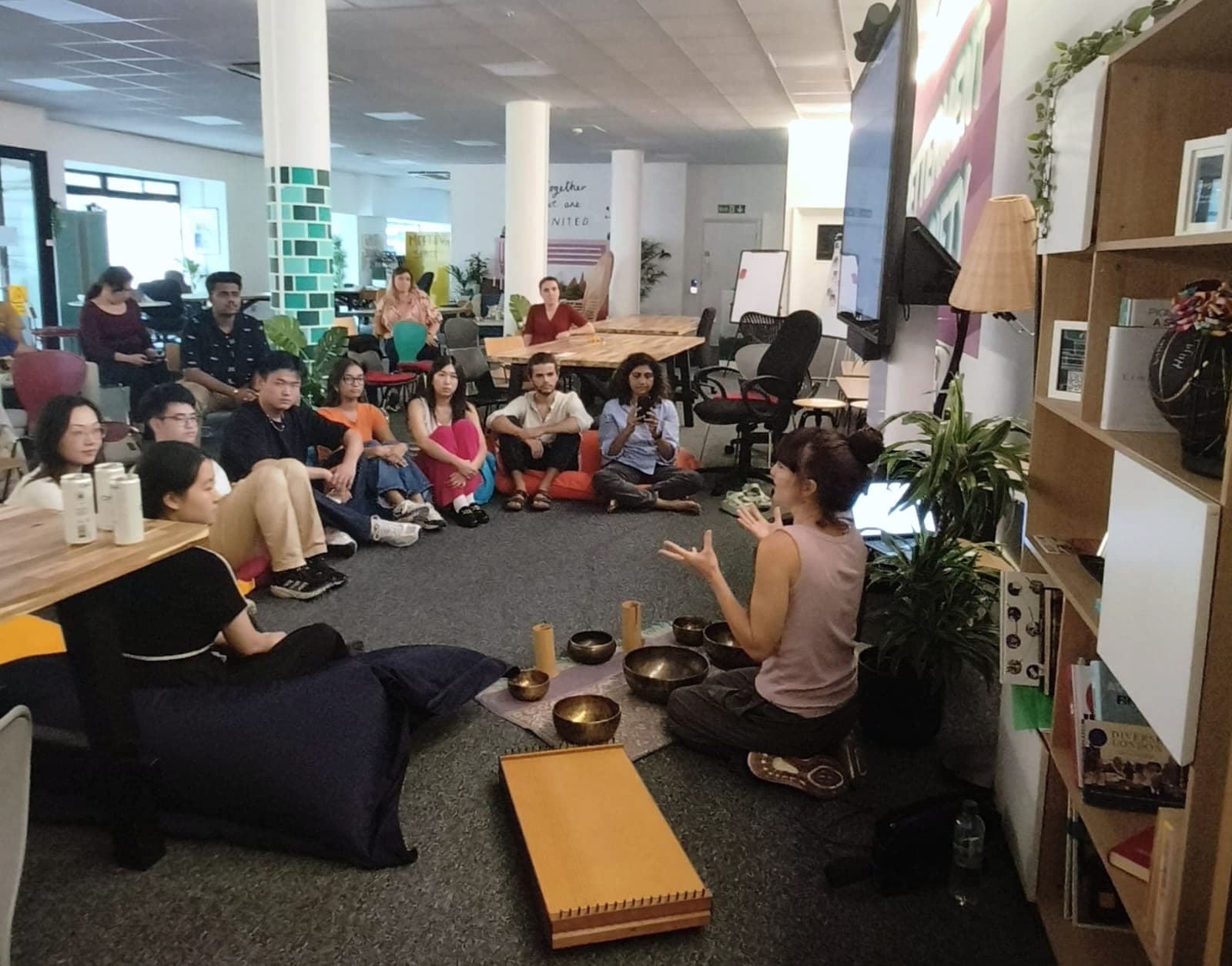
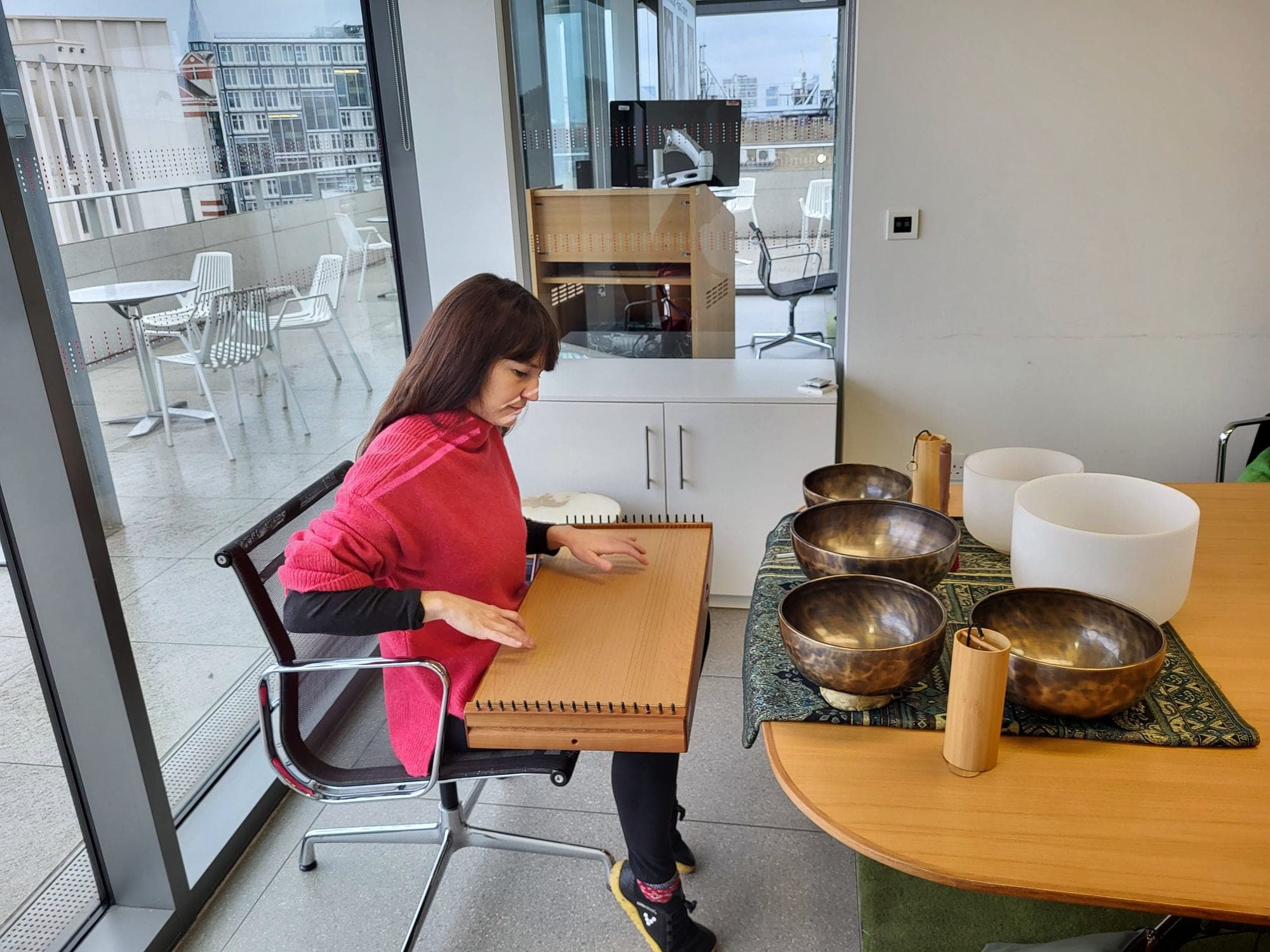
Practised regulation, art, sound and breath work, so the skill exists in the body.
- Nervous system regulation practice
- Art and music sessions
- Sound and immersive audio experiences
- Peer support structure design
What people will be able to do
Afterwards, people can:
- Notice the early signs before it gets too much
- Calm themselves in under two minutes
- Ask for help clearly, before a crisis
- Support someone else without burning out
Outcomes
What it adds up to
Better wellbeing
Measured improvement in psychological safety and emotional resilience.
Stronger relationships and balance
Healthier relationships at home, at work and socially, and a better balance in life.
Less conflict and absenteeism
Fewer grievances, less presenteeism, and fewer sudden absences.
This is also a component of ‘MindHug One’, 40 hours of training grounded in behavioural science, across wellbeing, AI and cybersecurity, and entrepreneurship.
Evidence
Does it work?
Measured: wellbeing, psychological safety, confidence. Reported at follow-up: healthier habits, support used earlier. The return: less absence, more focus.
- Of goals met, LSE Summer School
- 94%LSE Summer School, 2024
- Improved their wellbeing, Measured cohorts
- 80%Measured cohorts
- Became more cognitively flexible, Measured cohorts
- 70%Measured cohorts
- Universities
LSE Summer School
- Result
- 94% of goals met
- Outcomes we delivered
- Resilience and social anxiety workshops for international students, run every year from 2022 to 2024, building confidence with workload and career paths.
- Entrepreneurs
LSE Generate · British Council
- Result
- 100% of founders improved in psychological safety
- Outcomes we delivered
- A 20+ hour founder programme with real-customer experiments: 93% would recommend it, with more confidence selling and revenue traction reported.
“MindHug’s Therapeutic Art session was incredible for my team. We grew closer together, understood each other better and the trust between team members just went to another level.”













Delivery
How it is delivered.
We deliver it
Our facilitators and psychologists run it with your cohort, in person or online.
We train your people
Your own coaches are trained to deliver it, so it continues after we leave.
Tailored either way. Built around what you are actually seeing, not picked off a list.
What is included
- Facilitated sessions with qualified psychologists
- Participant toolkit
- Staff, manager or tutor briefing
- CPD accredited options
- Pre and post measurement using validated scales
How progress is assessed
- Coping under load and resilience, before and after against recognised scales
- Whether people ask for help before a crisis, not after
Knowing matters. Doing changes things.
No obligation.
A few lines is enough.
Why it works: what is underneath the behaviour
Underneath the behaviour
- Under threat the nervous system narrows attention, and advice cannot land on a narrowed field
- Asking for help is a status calculation before it is a wellbeing one
- What happened last time somebody raised it governs whether it is raised again
How this programme is built, step by step
Safety
Regulation before content. Nothing else works until the body settles.
01Understanding
What the stress response is doing, and why it is not a malfunction.
02Reframing
From "I am not coping" to "my system is doing its job in the wrong conditions".
03Experience
Practised regulation, art, sound and breath work, so the skill exists in the body.
04
Safety opens exploration. Exploration creates experience. Experience updates what people expect. Updated expectations change behaviour, and feed back into safety.
Related programmes